




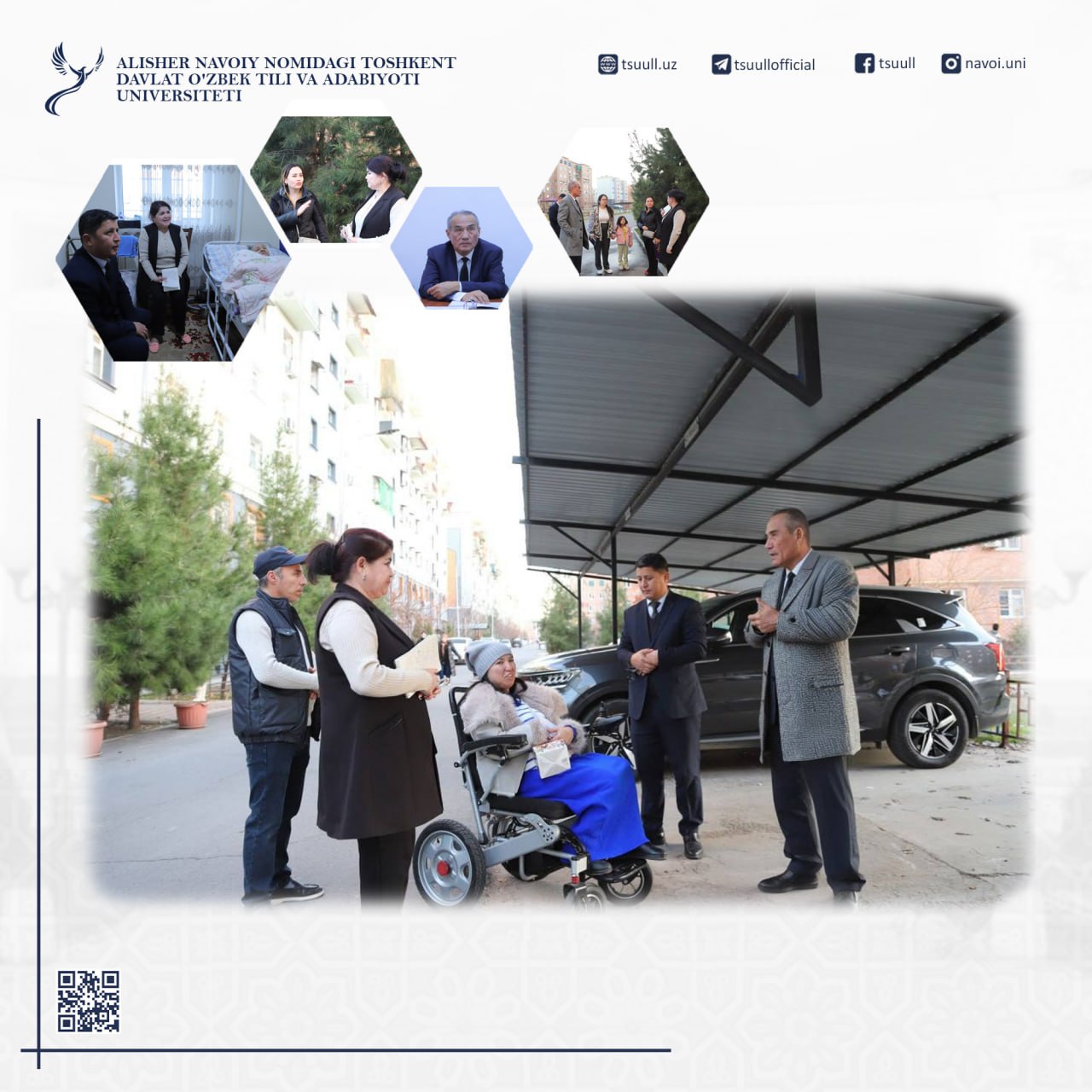
Visit, Dialogue, and Concrete Actions
Shuhrat Sirojiddinov, a deputy of the Tashkent City Council of People’s Deputies, Rector of Alisher Navo’i Tashkent State University of Uzbek Language and Literature, and academician, paid an official visit to the “Tashabbus” mahalla.
The primary objective of the visit was to ensure the implementation of the decrees and resolutions of the President of the Republic of Uzbekistan at the local level, to assess the effectiveness of ongoing socio-economic reforms in the community, and to identify existing issues through direct dialogue with residents.
Together with the mahalla chairperson, Z. Sayidxo‘jayeva, the delegation reviewed the living conditions of residents, the state of social infrastructure, ongoing благоустройство efforts, and initiatives aimed at ensuring employment. Particular attention was also given to programs supporting socially vulnerable groups, vocational guidance for youth, and measures to promote their employment.
During the visit, the deputy held open meetings with local residents, listening to their concerns and proposals. Recommendations were provided on addressing raised issues in a systematic manner, ensuring timely identification of local challenges, and implementing effective solutions.
As part of the visit, financial assistance was provided to socially vulnerable residents of the mahalla, including persons with disabilities. In particular, it was noted that Z. Yakubova, a person with disability, is currently in a difficult social situation: her only son sustained serious injuries, including a fractured femur, in a road traffic accident. The family was recognized as requiring special attention, and necessary support was provided.
In addition, specific instructions were given to the mahalla leadership and community activists to regularly monitor the family’s condition, organize systematic social support, and further strengthen efforts in vocational training and employment for young people.
At the conclusion of the visit, particular emphasis was placed on the importance of ensuring the implementation of the priorities set by the President, strengthening the neighborhood-based approach to governance, addressing citizens’ issues in a targeted manner, and maintaining continuous open dialogue with the population.