





Sustainable Energy Efficiency Practices at TSUULL
As part of its sustainability and green campus development strategy, TSUULL continues to strengthen energy efficiency across university buildings, administrative facilities, laboratories, and educational infrastructure. The university has implemented a series of modernization initiatives aimed at reducing electricity consumption, improving operational efficiency, and supporting environmentally responsible campus management.
TSUULL has achieved a high level of energy-efficient appliance usage across campus facilities. 99% of installed equipment complies with energy-saving standards and supports the university’s long-term sustainability objectives.
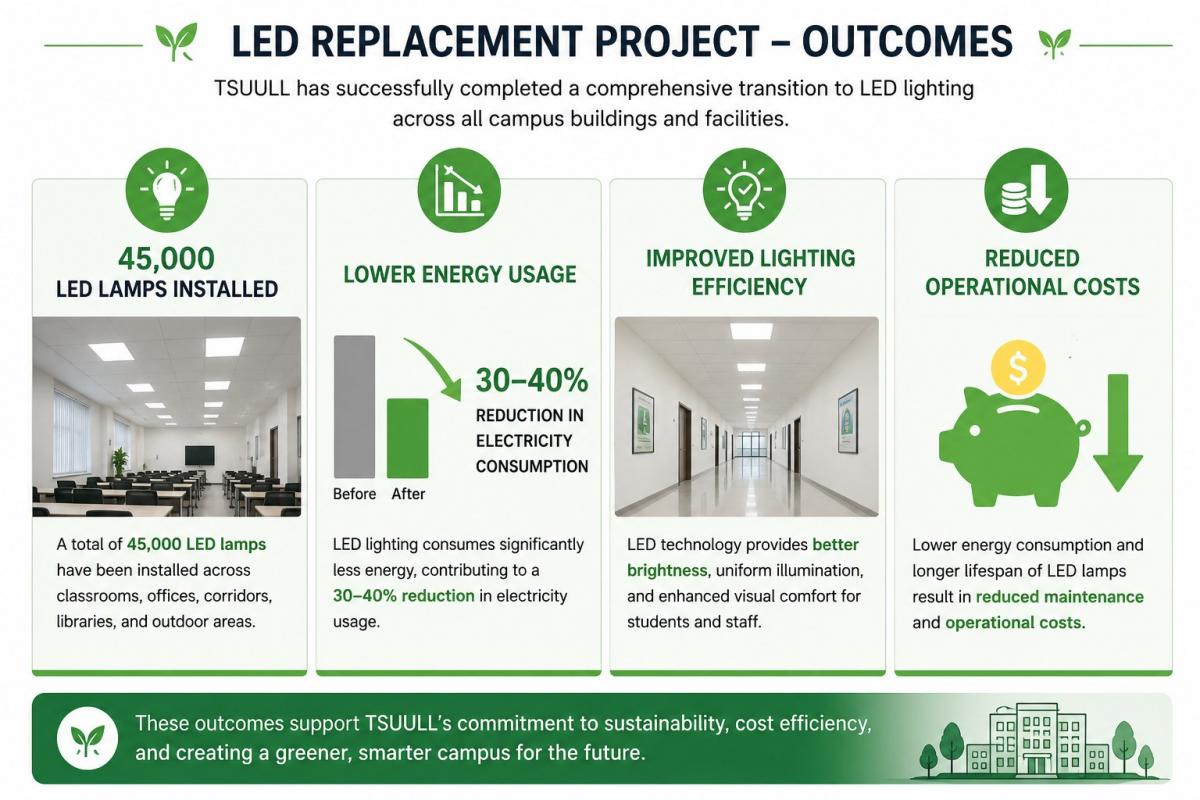
LED Replacement Project
TSUULL has fully transitioned to LED lighting systems across classrooms, offices, corridors, libraries, and outdoor campus spaces. The replacement of conventional lighting with LED technology has significantly reduced electricity consumption and maintenance requirements.
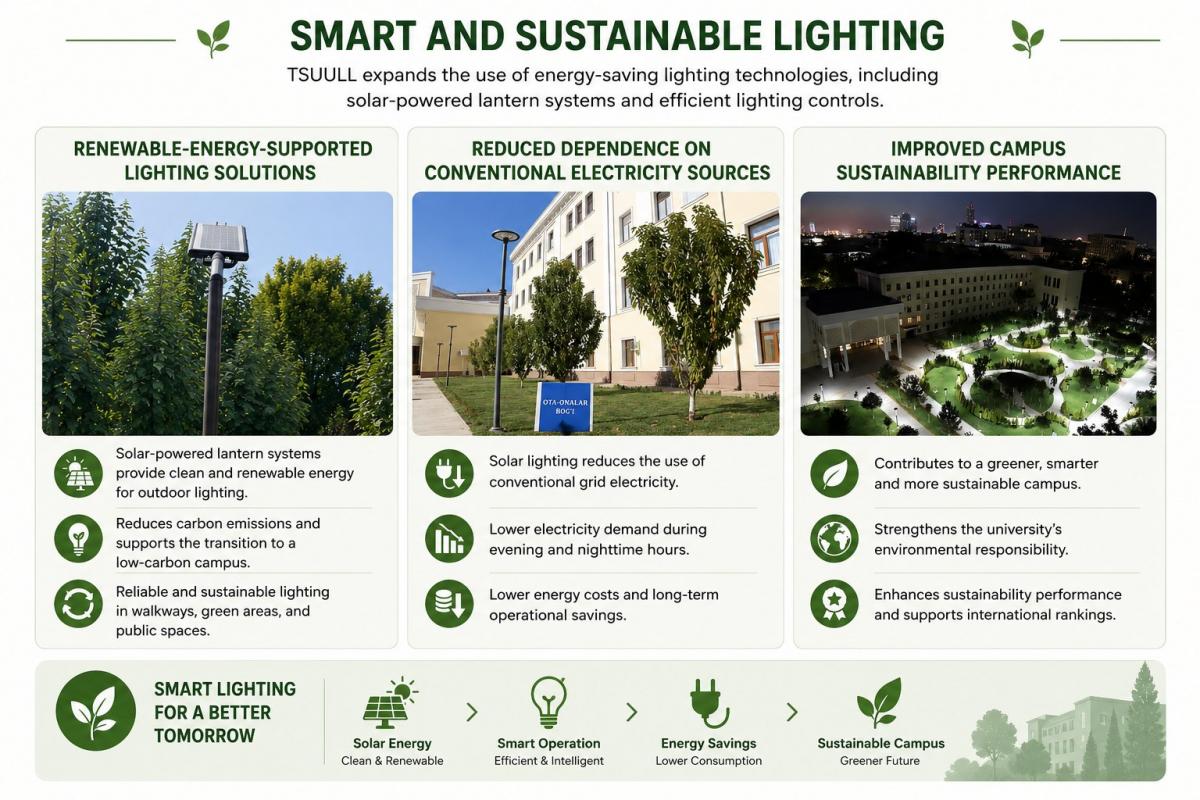
Smart and Sustainable Lighting
As part of its commitment to sustainable campus development and responsible energy management, TSUULL continues to expand the implementation of smart and sustainable lighting technologies across university facilities.
The university has introduced energy-efficient lighting systems that combine reduced electricity consumption with environmentally responsible operational practices. These initiatives include the deployment of solar-powered lantern systems, LED-based outdoor lighting, and efficient lighting controls in selected academic and administrative buildings.
To further optimize electricity usage, TSUULL has integrated lighting management measures such as:
- automatic lighting controls in selected facilities;
- motion-sensor lighting in corridors and common areas;
- scheduled lighting operation for outdoor spaces;
- replacement of conventional lighting with long-life LED systems.
In addition, solar-powered lanterns have been introduced to support renewable-energy-based campus lighting solutions and reduce reliance on traditional electricity sources.
Outcomes
- Expansion of renewable-energy-supported lighting infrastructure;
- Reduced dependence on conventional electricity sources;
- Improved campus energy efficiency and operational sustainability;
- Lower electricity consumption and maintenance requirements;
- Enhanced safety and visibility in outdoor and public campus areas;
- Increased institutional contribution to green campus development and environmental responsibility initiatives.
These measures support TSUULL’s broader sustainability objectives, including carbon reduction, energy conservation, and the creation of a smarter and more environmentally sustainable campus environment.
HVAC Modernization
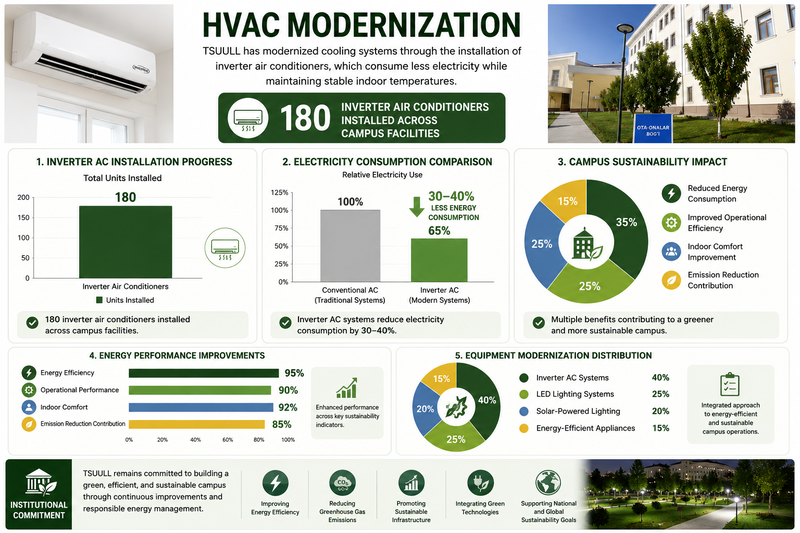
As part of its long-term sustainability and energy management strategy, TSUULL has undertaken significant modernization of campus cooling infrastructure through the phased installation of inverter air-conditioning systems across academic buildings, administrative offices, classrooms, libraries, and selected student facilities.
Traditional air-conditioning systems often consume high levels of electricity due to constant compressor operation and inefficient temperature regulation. To address this challenge, TSUULL has prioritized the replacement of outdated systems with inverter-based HVAC technologies that automatically regulate compressor speed according to indoor temperature demand. This approach substantially reduces electricity consumption while maintaining stable and comfortable indoor conditions.
The modernization initiative supports both operational efficiency and environmentally responsible campus management by lowering energy demand and improving the performance of university facilities.
Outcomes
- Installation of 180 inverter air conditioners across campus facilities;
- Reduced electricity consumption compared to conventional cooling systems;
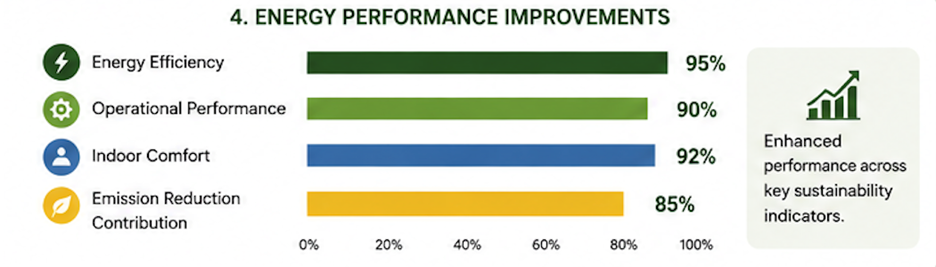
- Improved energy performance and operational efficiency;
- Enhanced indoor thermal comfort for students, faculty, and staff;
- Lower maintenance requirements and extended equipment lifespan;
- Contribution to greenhouse gas emission reduction and sustainable campus operations.
Energy-Efficient Appliance Procurement
TSUULL prioritizes the procurement of energy-efficient electrical and electronic equipment in accordance with institutional sustainability objectives and responsible procurement principles. Energy efficiency has become an important consideration during the acquisition of campus appliances, office equipment, and facility management systems.
The university systematically selects appliances and equipment that comply with modern energy-saving standards and contribute to lower electricity consumption and improved environmental performance.
Priority is given to:
- inverter-based HVAC systems;
- energy-efficient refrigerators and cooling equipment;
- LED lighting technologies;
- low-energy ventilation systems;
- efficient office and IT equipment;
- automatic power-saving and energy-management devices.
Through sustainable procurement practices, TSUULL aims to minimize unnecessary energy use, reduce operational costs, and support the transition toward greener and smarter campus infrastructure.
The university also promotes:
- longer equipment lifecycle management;
- reduction of energy waste;
- environmentally responsible purchasing decisions;
- integration of sustainability criteria into procurement processes.
TSUULL is committed to:
- improving campus-wide energy efficiency;
- reducing greenhouse gas emissions;
- promoting sustainable and low-carbon infrastructure;
- integrating green technologies into educational and administrative operations;
- supporting renewable-energy utilization initiatives;
- strengthening environmental awareness among students and staff;
- contributing to national and international sustainability goals and frameworks.
The university will continue:
- monitoring energy consumption and performance indicators;
- implementing modernization projects across campus facilities;
- expanding smart and sustainable infrastructure solutions;
- enhancing energy management systems;
- strengthening sustainability reporting and institutional transparency.
These efforts reflect TSUULL’s ongoing commitment to creating a greener, smarter, and more environmentally sustainable university campus for future generations.